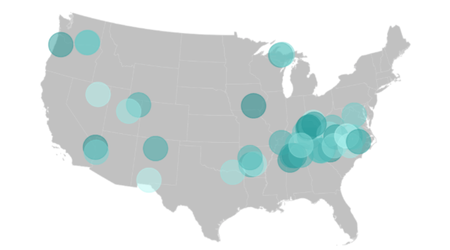
Insights from a 53-Site Breast Program Transformation

Lifepoint Health’s enterprise rollout of Eon Breast revealed insights into the clinically urgent profile of patients with incidental breast findings compared to screening patients.

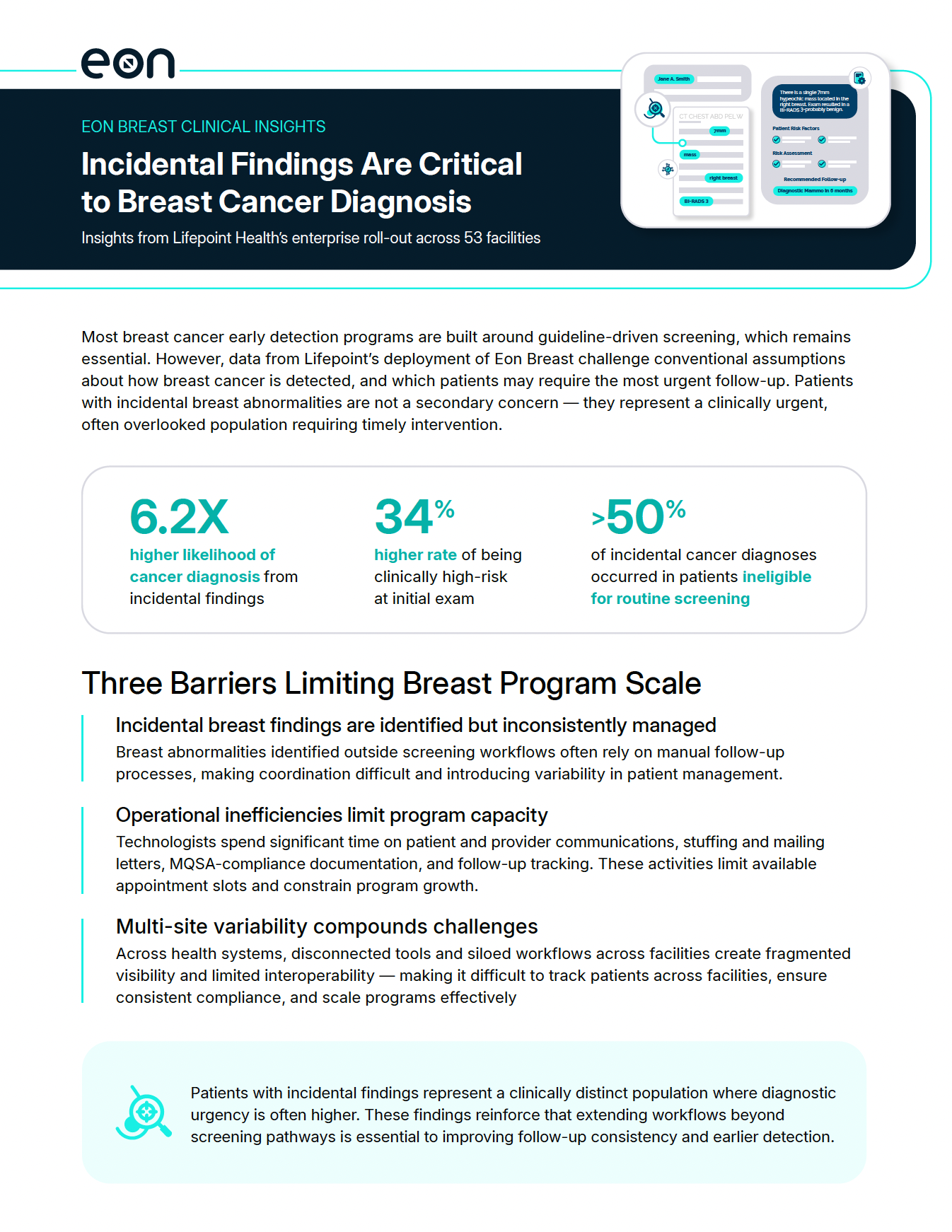
6.2X

more likely to be diagnosed with breast cancer

1.3X

more likely to be clinically high-risk at initial exam

>50%

of incidental cancer diagnoses were ineligible for screening
THE CHALLENGE

Risk doesn’t always enter through screening

While screening drives volume, clinical urgency is concentrated in incidental findings. Patients identified outside routine mammography pathways are typically higher risk and require faster, coordinated follow-up.

Key Objectives

Over half of incidental cancers diagnosed were for patients traditionally not eligible for screening (age gender)
Incidental cancer patients are more likely to present as high-risk
1 in 8 net-new patients needing breast care are identified incidentally

THE SOLUTION

Capacity is constrained by administrative burden

Breast programs aren't limited by patient demand, but by manual processes. MQSA documentation, phone and letter outreach, and follow-up tracking consume technologist time and restrict scalable growth.

Key Enablers

Limited enterprise-wide performance visibility
Inspection preparation consuming clinical hours
Letter generation and outreach handled locally
Manual disparate workflows across facilities

THE RESULT

One workflow for full visibility into every patient

Lifepoint unified breast screening and incidental findings into a single longitudinal workflow, ensuring timely follow-up, reducing variability across sites, and restoring operational capacity systemwide.

Key outcomes

Limited enterprise-wide performance visibility
Inspection preparation consuming clinical hours
Letter generation and outreach handled locally
Manual disparate workflows across facilities

Don’t miss these other success stories